a bit of a heated discussion, that i observe while waiting for the ferry at dambai:
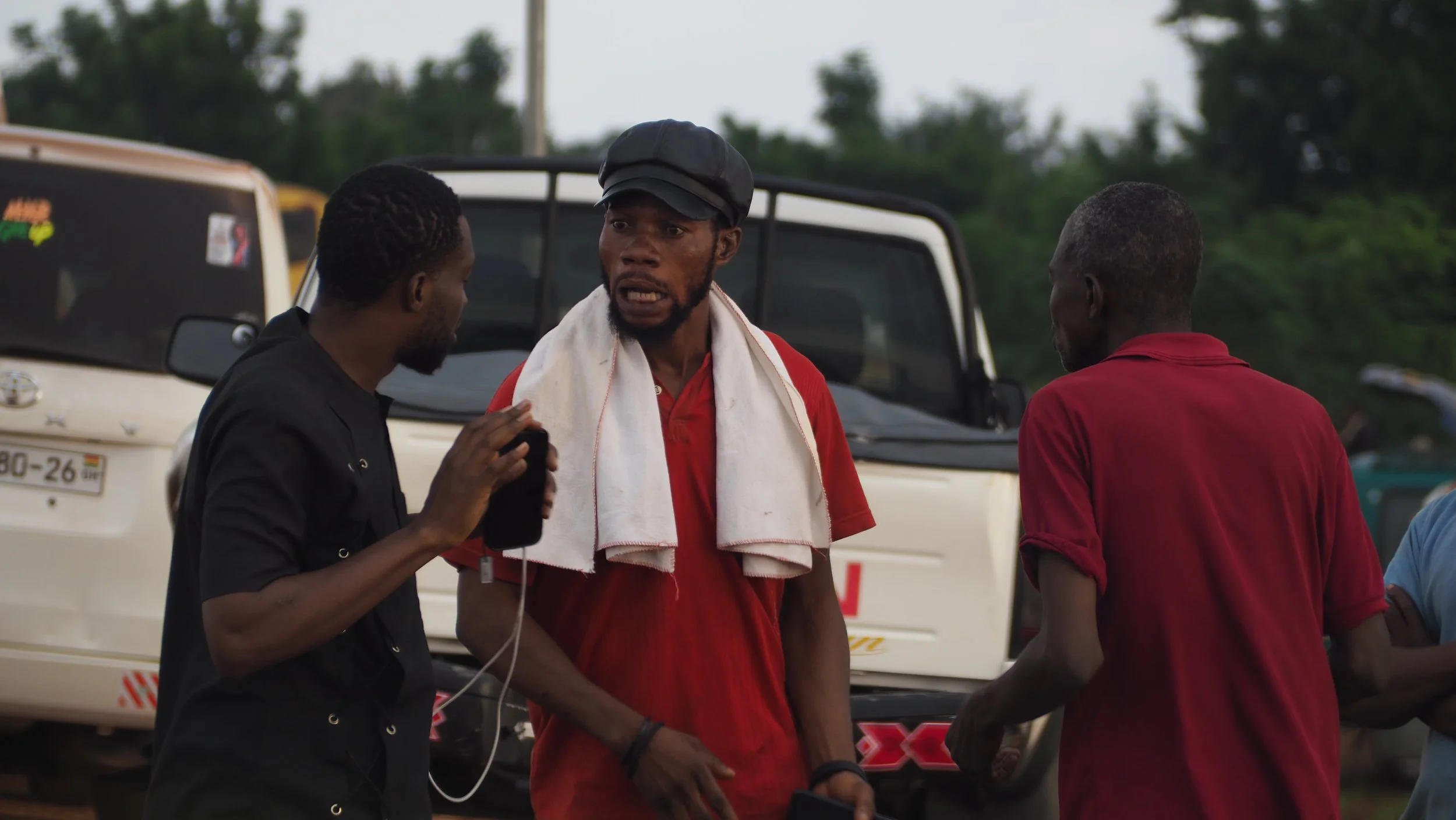
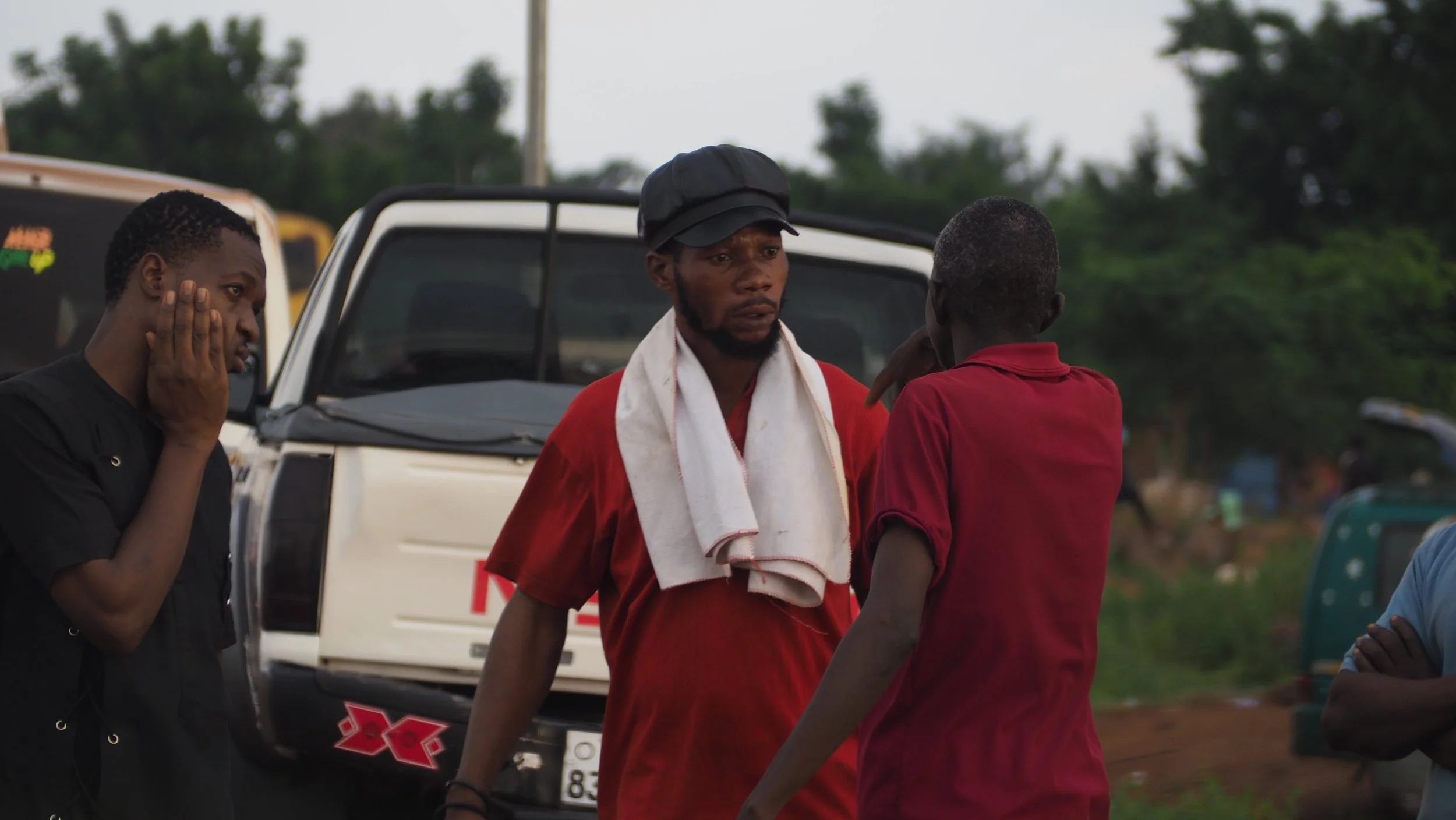
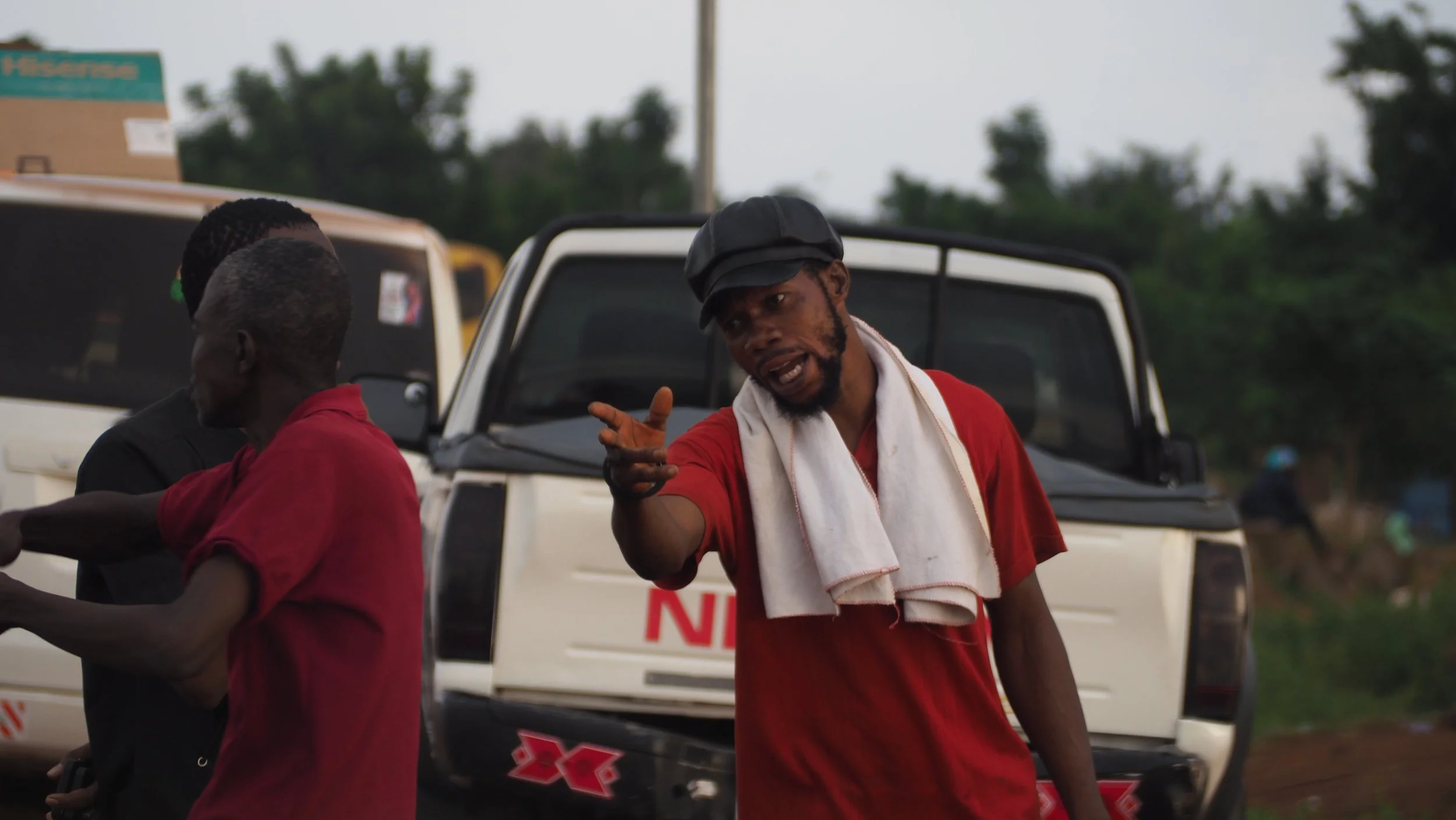
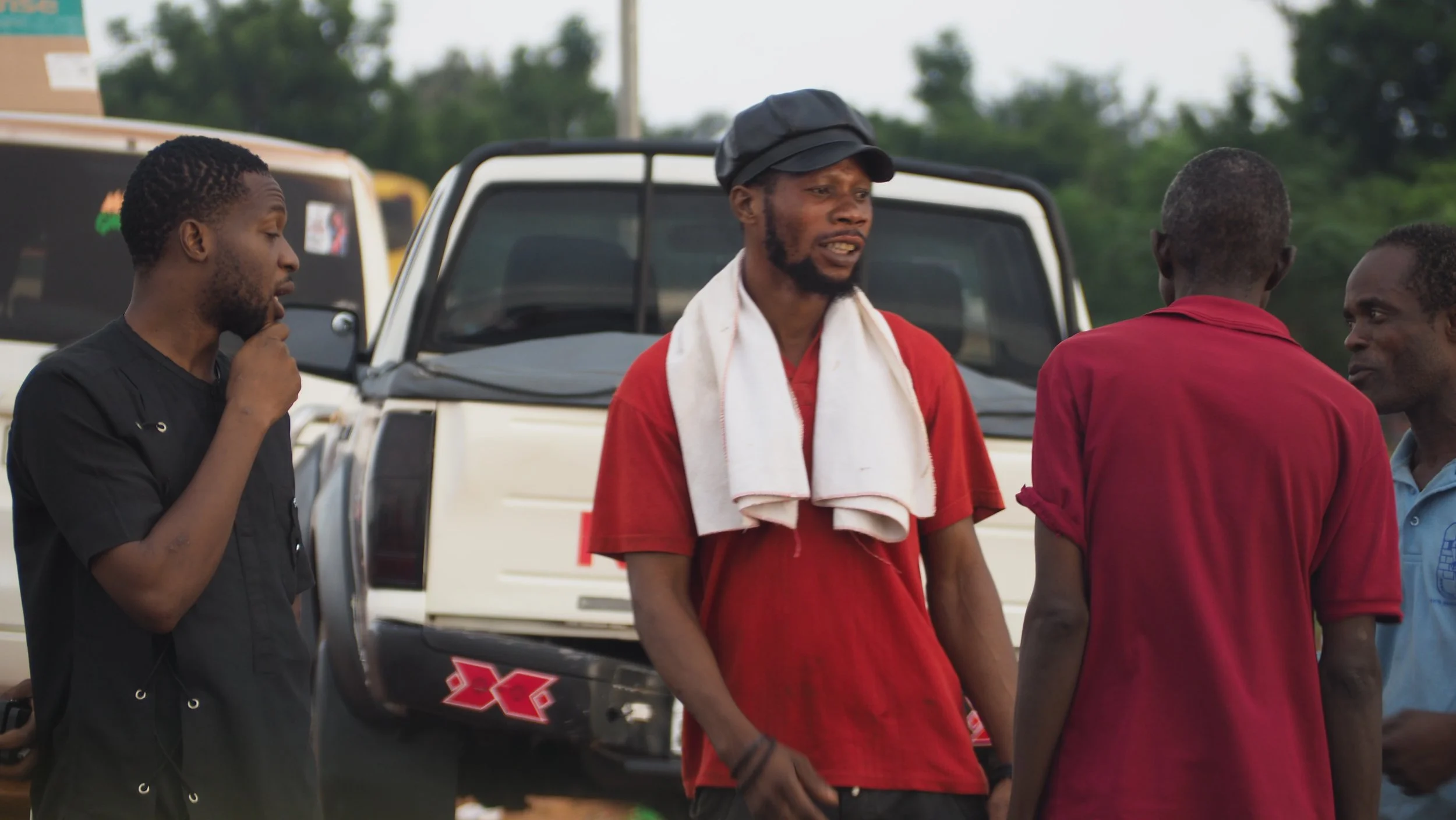
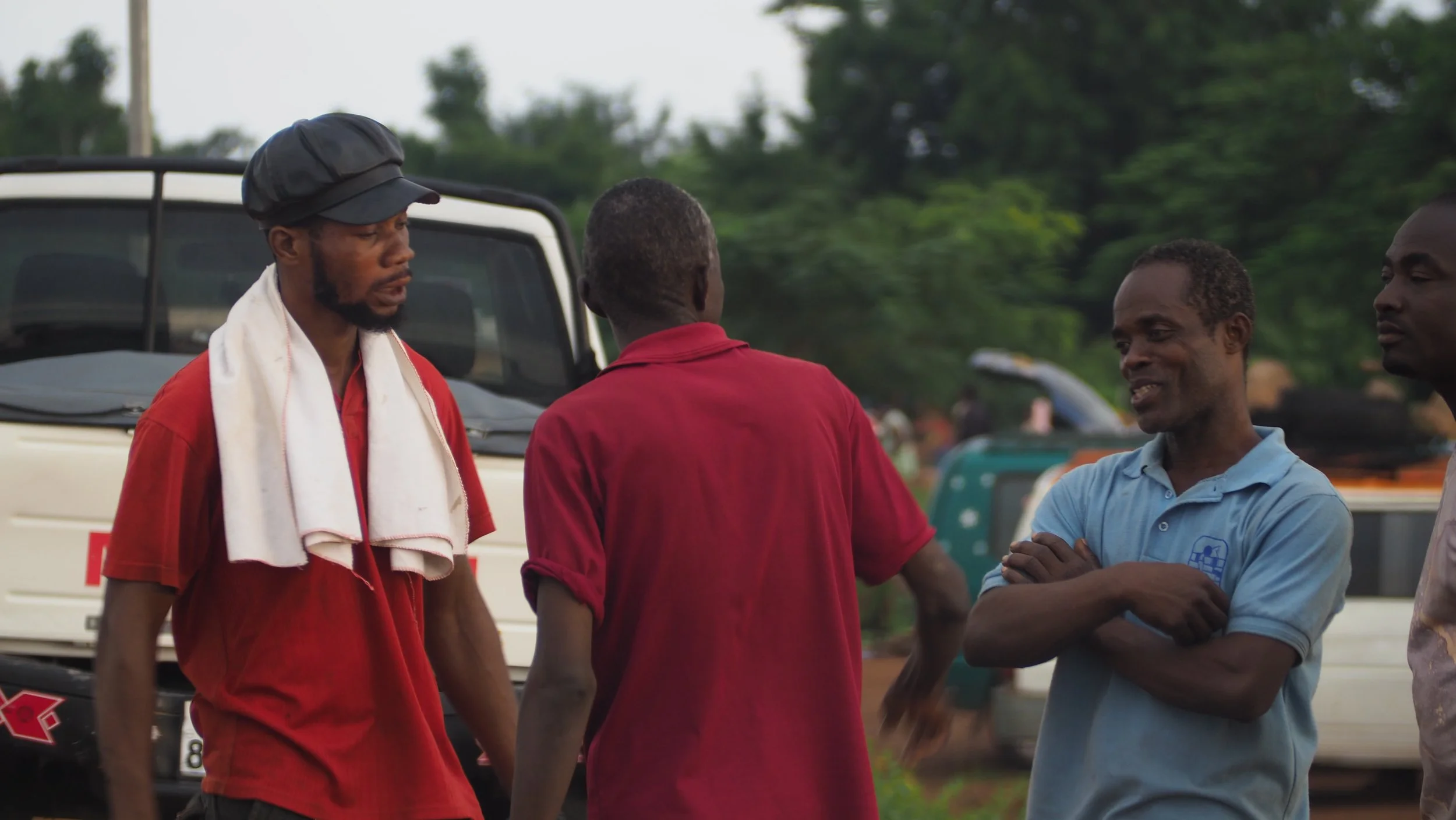
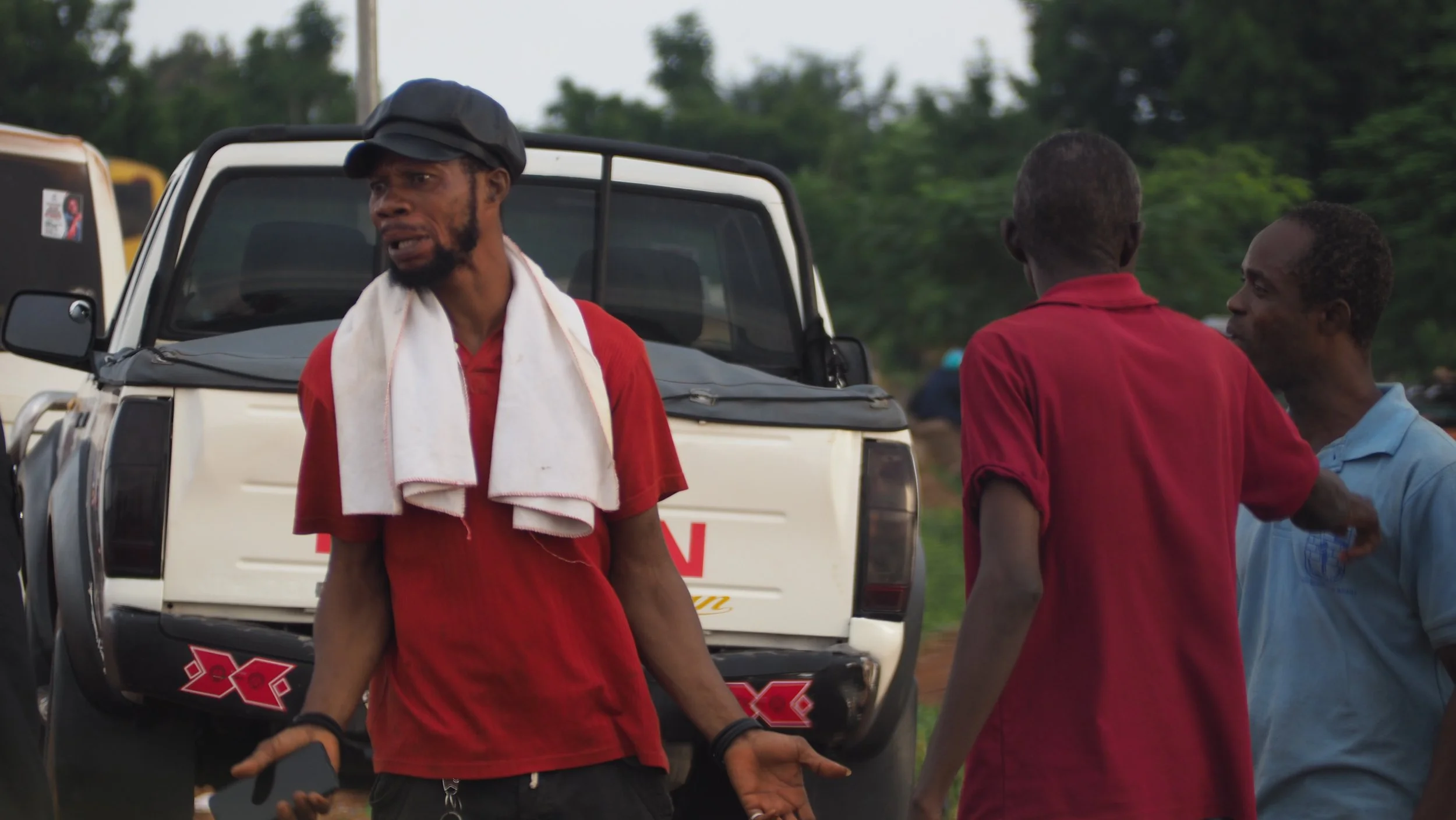
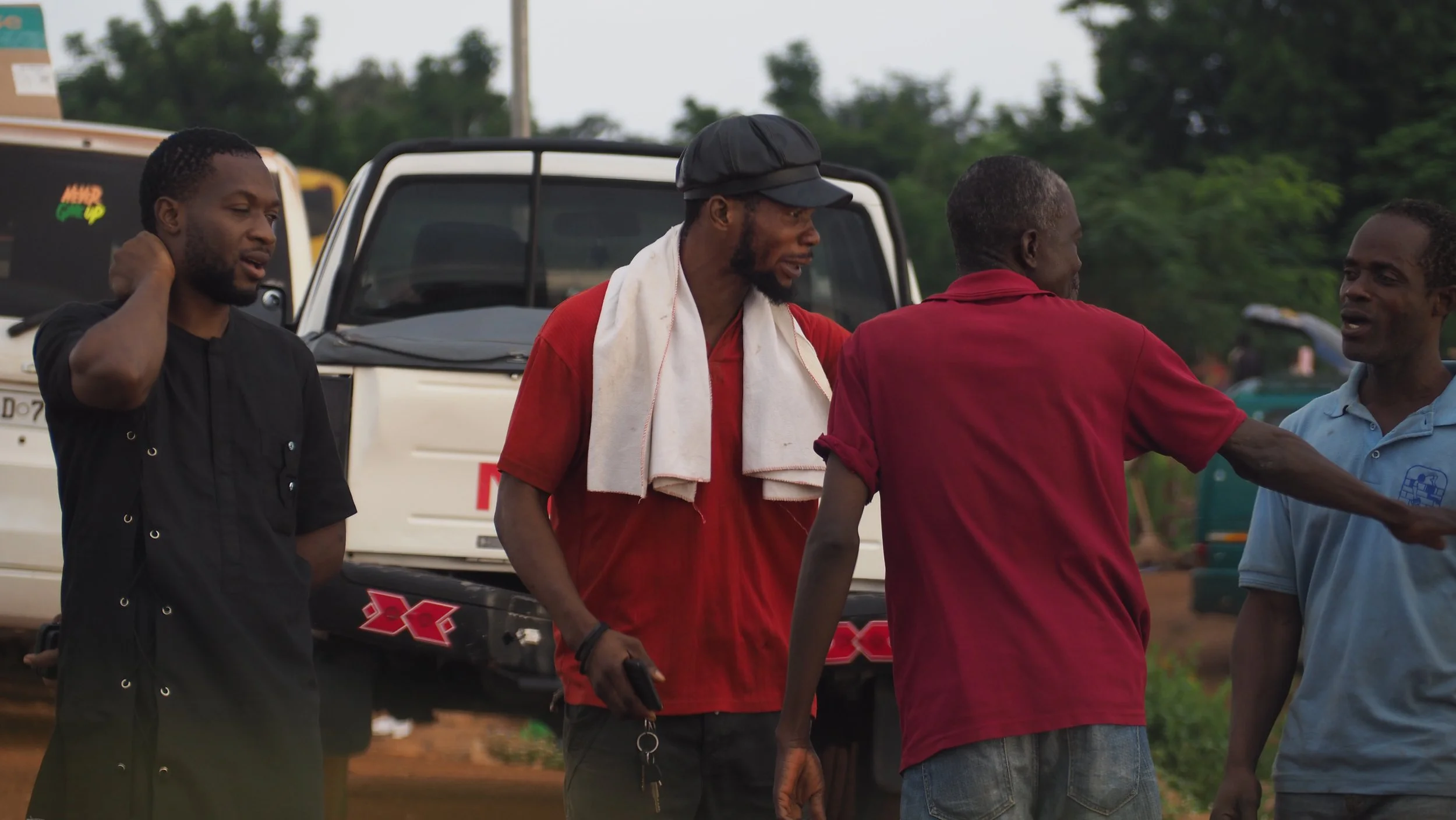
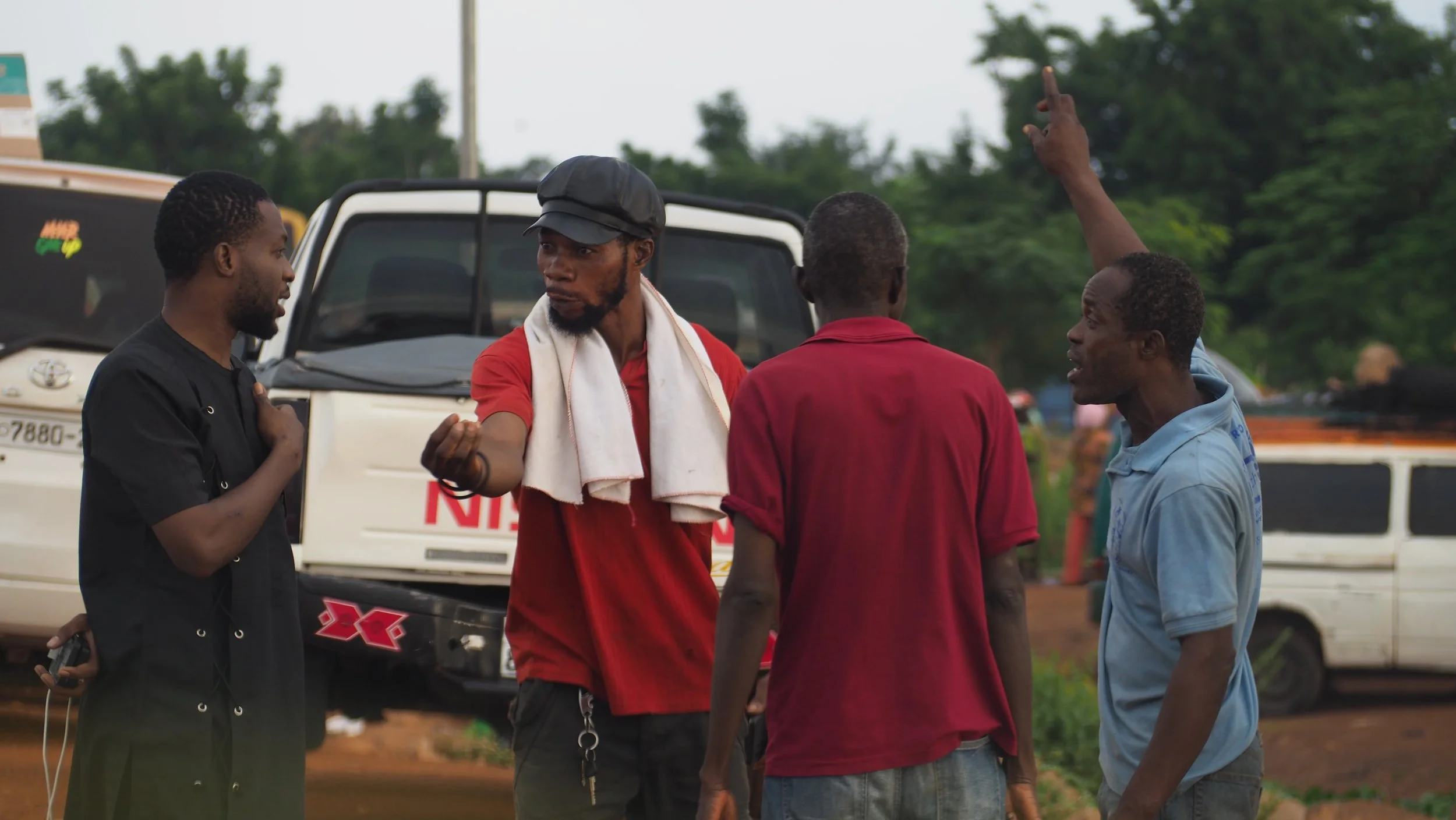
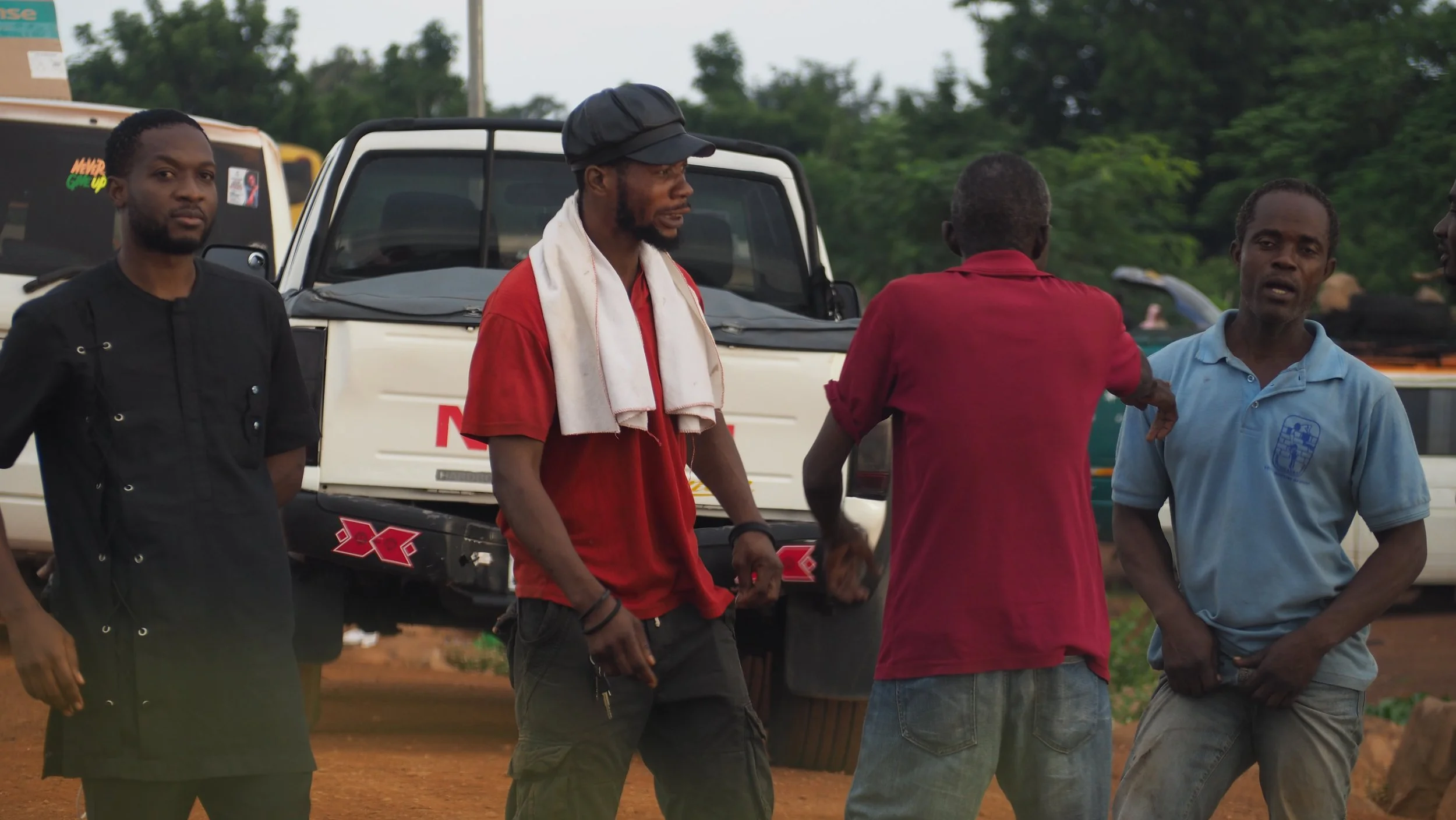
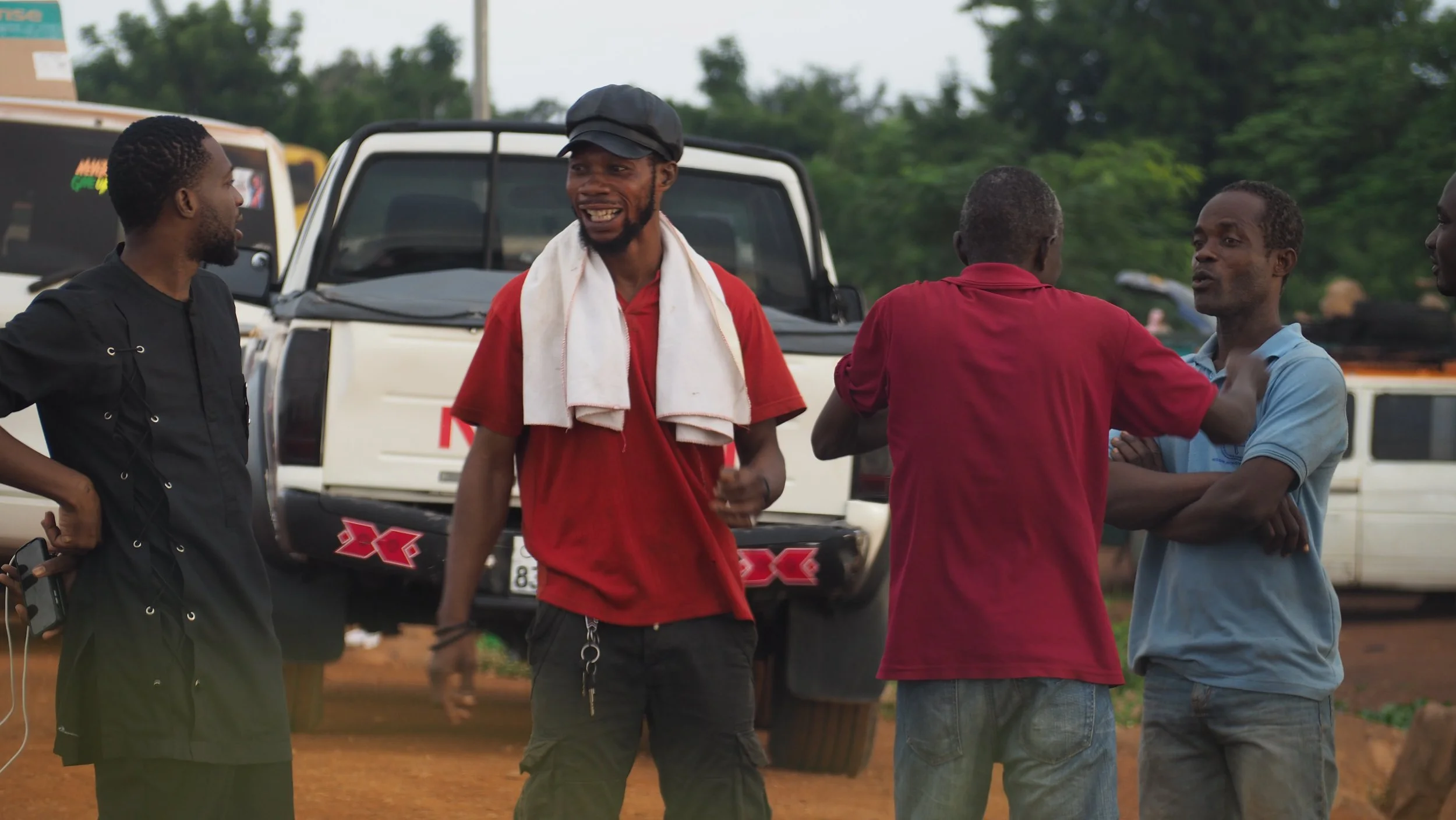
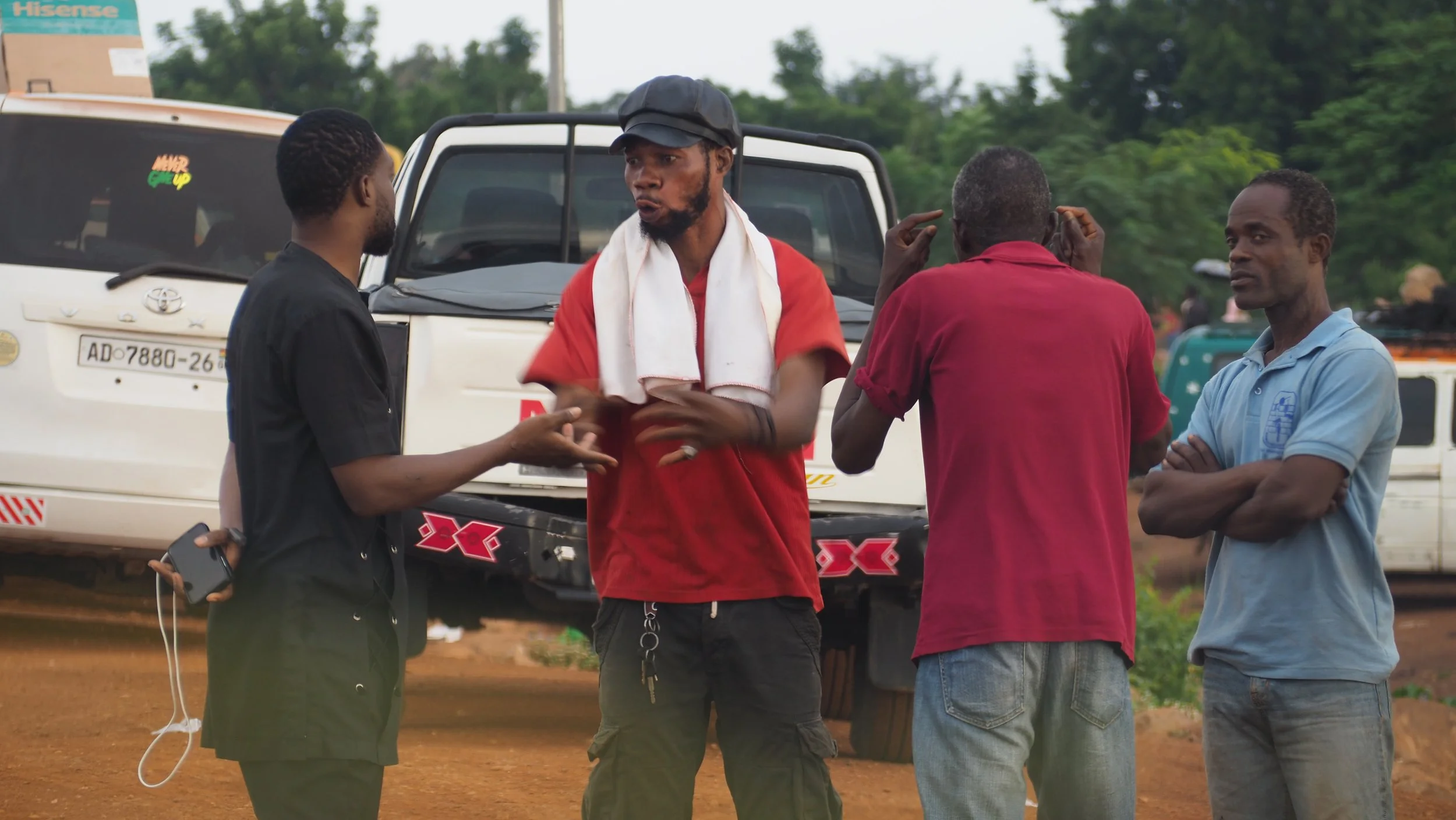
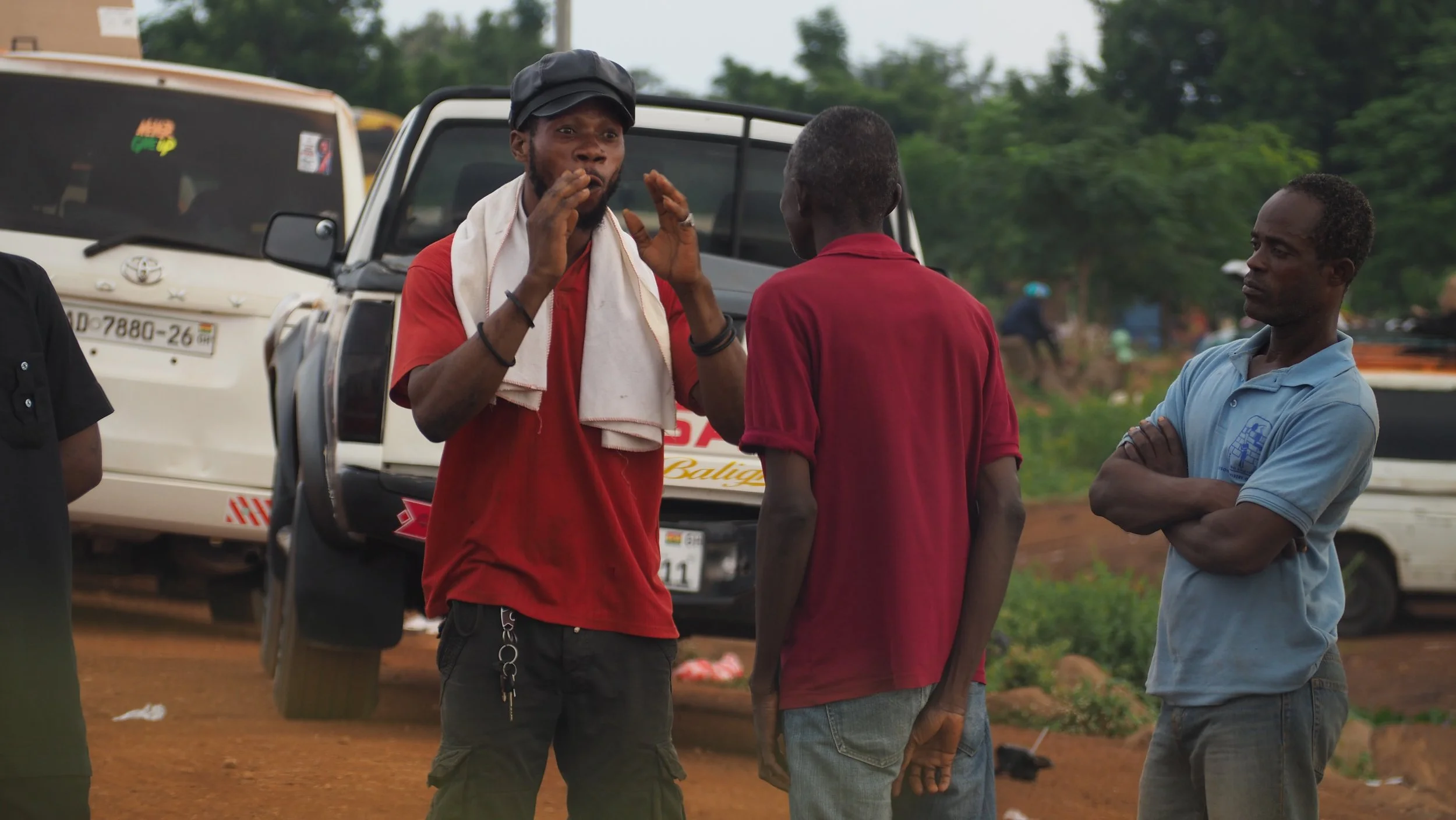
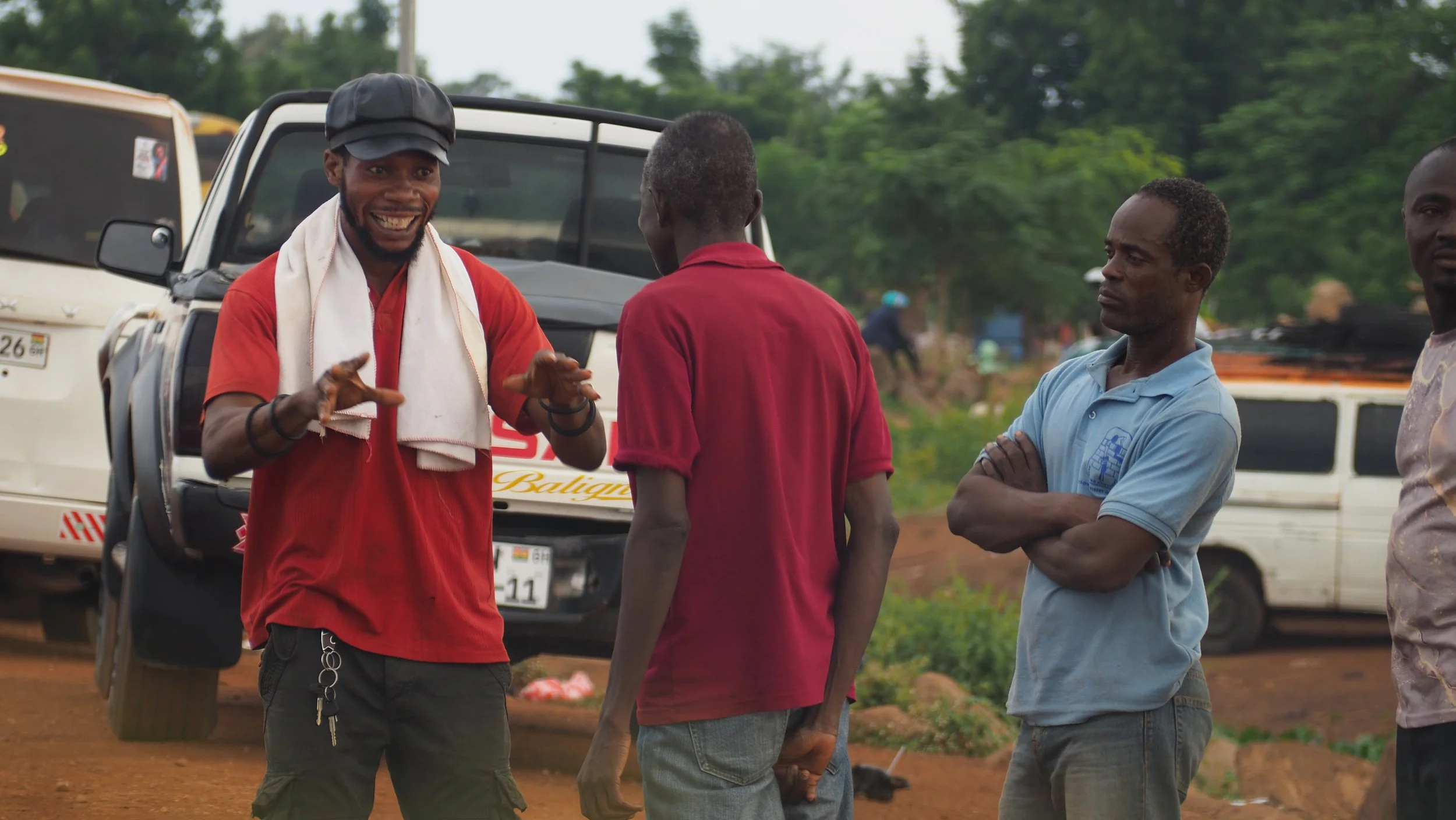
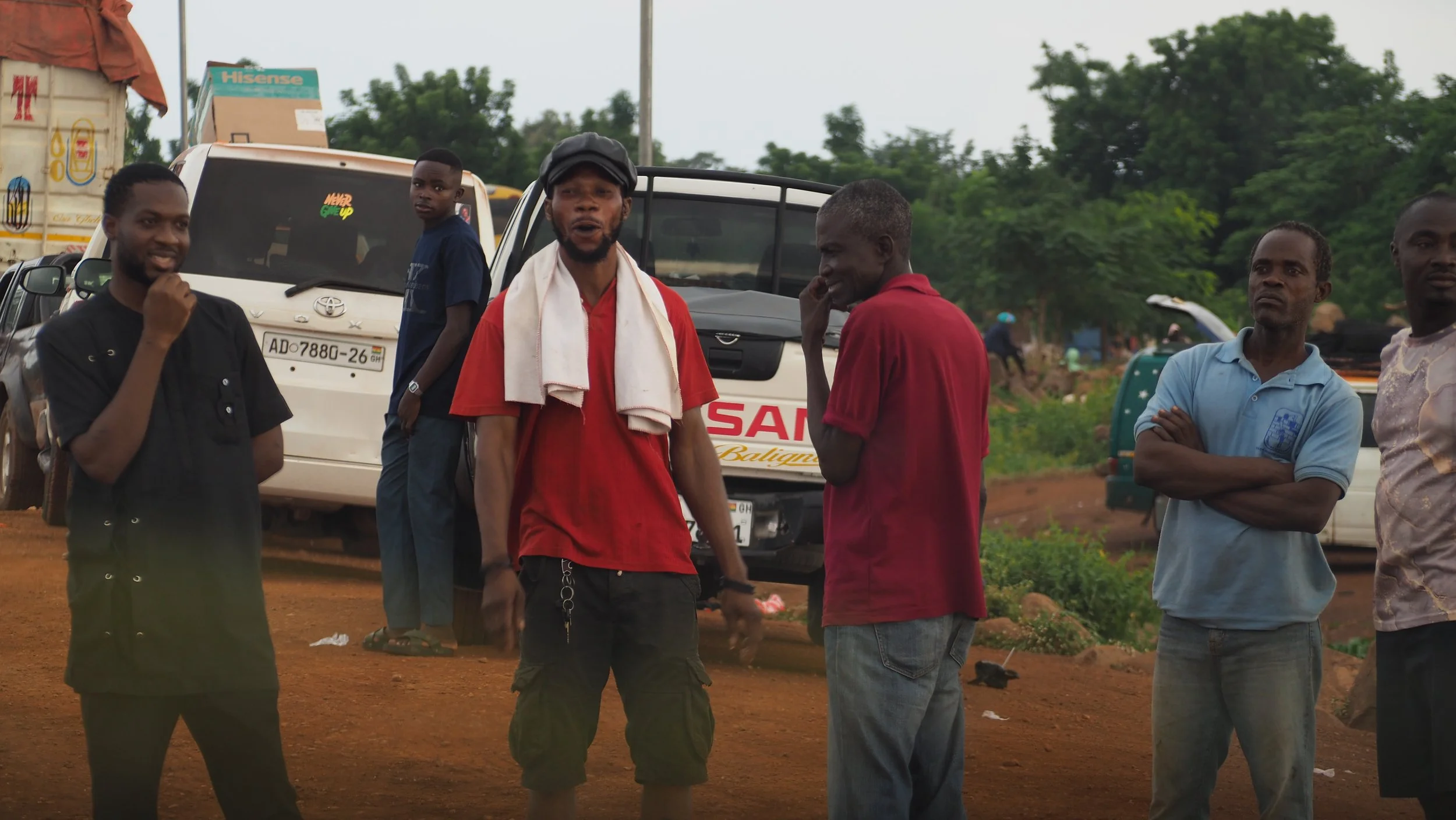
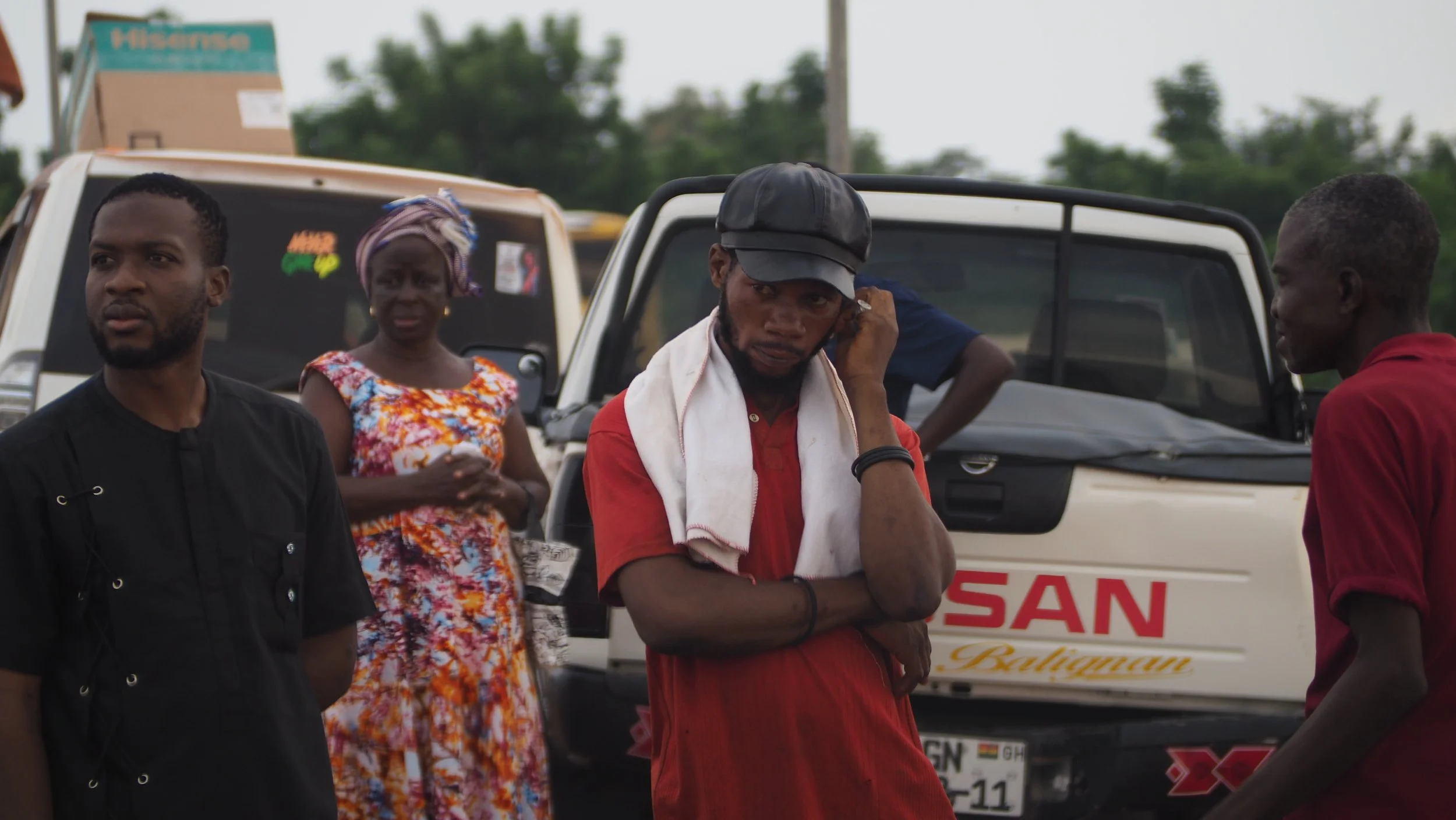
what did they discuss? maybe this?
… some thoughts on the economics of healthcare in ghana, and what we call ‘development’:
something i've noticed repeatedly on my trips to ghana is how the economics of healthcare work, or rather, don't work.
companies from the so-called ‘developed world’ typically don't bother setting up local subsidiaries in ghana or other countries of the ‘developing world’. instead, they work through local distributors, who add their margins on top of import duties, transport costs, currency fluctuations and whatever else comes along the way. so specialised medical equipment can end up costing considerably more in ghana than in europe.
some numbers: a ‘good’ doctor's salary in ghana amounts to around €400 a month. filling up the tank of a car still costs around €100. and a laser system for eye treatments will set you back somewhere between €20,000 and €30,000. do the maths!
and that's just the purchase. spare parts are often difficult to obtain, maintenance can be expensive or unavailable, and some of the equipment still in use in ghana has long been discontinued in europe, the us or japan. good luck finding someone to repair a machine that the manufacturer stopped supporting ten years ago.
and while we're at it, why do we keep talking about the ‘developed world’ and the ‘developing world’? as if one half of the world had finished developing and the other half was still trying to catch up. and catch up with what, exactly?
what does ‘developed’ actually mean? that we have managed to create healthcare systems in which almost every step allows someone to collect rents and make a profit? that we have built increasingly complex structures to manage the complexity we ourselves have introduced? that we spend enormous amounts of money treating diseases which, at least in part, could have been prevented?
i'm not arguing against modern medicine. if i ever need heart surgery, i'd certainly prefer a highly trained cardiac surgeon over someone with a more holistic interest in the human body. even better, of course, would be to have a ‘good’ heart and not need surgery in the first place.
but we have become so good at looking at individual parts that we increasingly forget about the whole. we have specialists, subspecialists and subspecialists of subspecialists, each looking at their particular organ, disease or biological mechanism. each with their own diagnostics, treatments and economic incentives.
meanwhile, the patient is still one person. someone who eats, sleeps, works, worries, moves (or doesn't), and lives in a particular social and economic environment. all of these things interact, whether our medical disciplines and reimbursement systems acknowledge it or not.
and isn't that much the same problem we have with the healthcare system itself? we keep tinkering with individual parts, replacing components, prescribing medications, adding technologies and creating new layers of administration. sometimes it works. sometimes we just move the problem somewhere else.
the system becomes more complex, more expensive (and more profitable). but is the patient actually getting healthier?
shouldn't we measure how ‘developed’ a healthcare system is by how healthy its population is and how easily people can access care, rather than by how much money it spends, how sophisticated its equipment is or how many specialists it employs?
and maybe the medical equipment industry could spend a little more time designing products that are affordable, robust and repairable locally, rather than expecting an economy that pays a doctor €400 a month to somehow find the funds for equipment designed for much richer markets.
ghana certainly needs more investment, better equipment and more specialists. but why should development mean copying the increasingly expensive and complicated systems we have created in europe and north america? surely we can learn from each other's mistakes, rather than making all of them twice.
after all, there is only one world. and we are all still developing, whether we like to admit it or not. some of us have just become rather more expensive at it. without necessarily getting anywhere faster.
the ferry is here now, so over to the other side!